

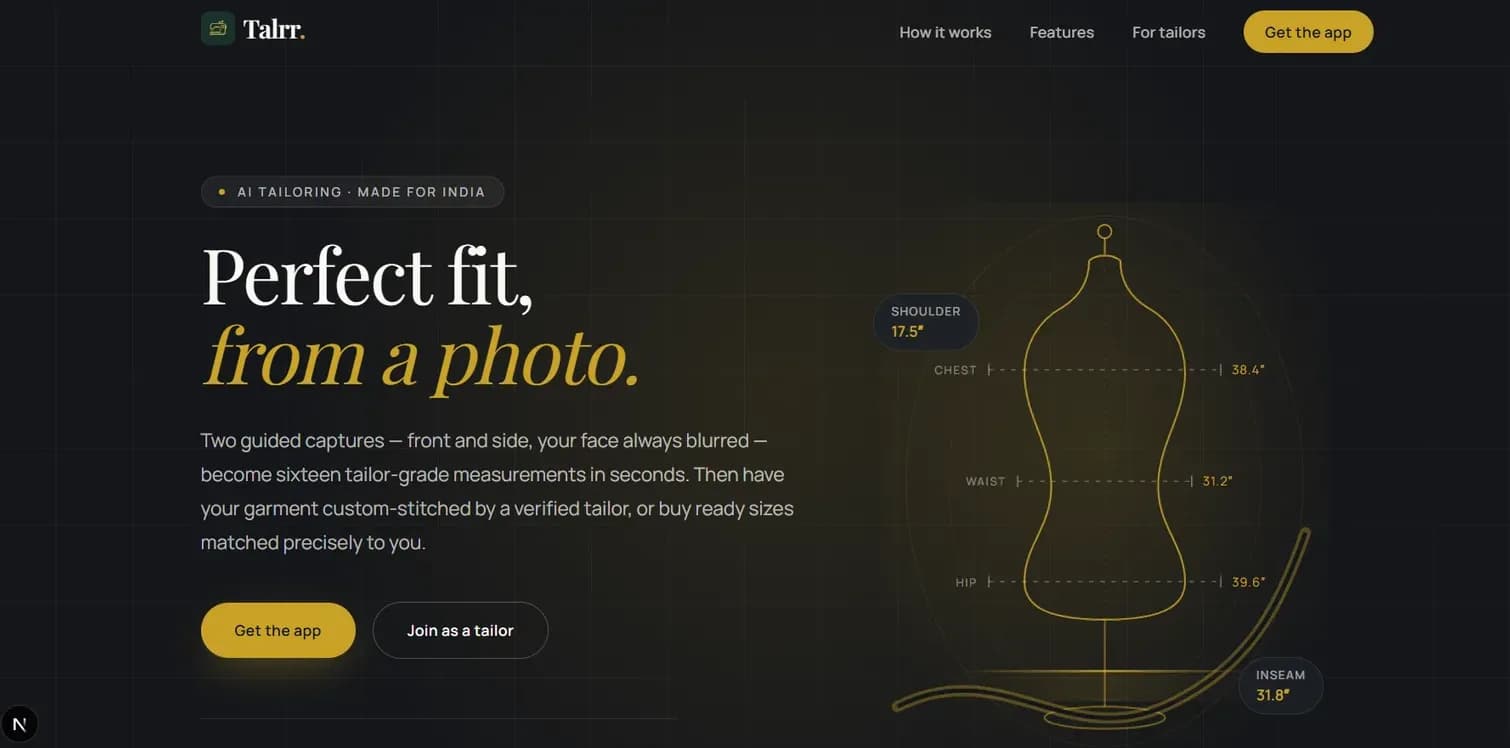
Made-to-measure clothing needs measurements, and measurements need either a tailor in the room or a customer holding a tape measure they have never been shown how to use. That single step is where custom tailoring loses most of the people who wanted it.
Talrr takes the measurements from a phone camera instead. The customer points the camera, the platform derives the numbers, and the order reaches the tailor with the sizing already attached to it.
The measurement step is the whole funnel
Everything else in the journey — browsing fabric, choosing a style, paying — is ordinary commerce that people complete every day. Measurement is the step that is unfamiliar, physical, and easy to get wrong, so it is the step that decides whether the rest of the platform ever gets used.
Computer vision with a physical ground truth
Most consumer vision problems tolerate being approximately right. This one does not: the output is a garment that either fits or is returned, which puts the engineering weight on capture conditions, guidance during capture, and knowing when a reading is not good enough to send on.
What the tailor receives
The camera is the customer's half. The tailor's half is an order that arrives complete — measurements, style, fabric — in the form they already work from, so the technology changes how the numbers were captured and nothing about how the garment gets made.