

Enterprise AI & platform engineering
We build what a business runs on.
- We rebuild the core. ERP and CRM cores for businesses whose off-the-shelf software stopped fitting the way the work is actually done.
- We put AI where the work happens. Document processing and agent systems that run inside existing operations, under audit, rather than beside them as a pilot.
- We make the pieces talk. SAP, Tally, a hospital system from 2009 and three spreadsheets, behaving as one. Usually the half of the problem nobody scoped.
- And we keep it running. The team that builds it operates it afterwards, under SLA. Handover is not the end of the engagement — which is the whole reason the first three lines are safe to promise.
- We build
- Systems that cannot be switched off while they are replaced
- Then
- We operate them, rather than hand them over
- You meet
- The engineers who would do the work. There is no pre-sales team.
We operate what we build
The team that builds the platform runs it afterwards, under SLA. Handover is not the end of the engagement.
Licensed and supported by us
Products built here run at companies that pay for them, supported by the same engineers who build client platforms.
Nothing we are paid to recommend
There are no reseller agreements behind the technology choices, and no pre-sales team between you and the engineers.
BFSI & Fintech
IRFC Invest — a digital front door for Section 54EC bond investors
IRFC Invest is the investor-facing application where Section 54EC bondholders see and track their holdings directly. Eight months and seven engineers, and the registrar queue that stood between an investor and their own holdings is gone.
- Registrar queue
- Replaced entirely for holdings enquiries
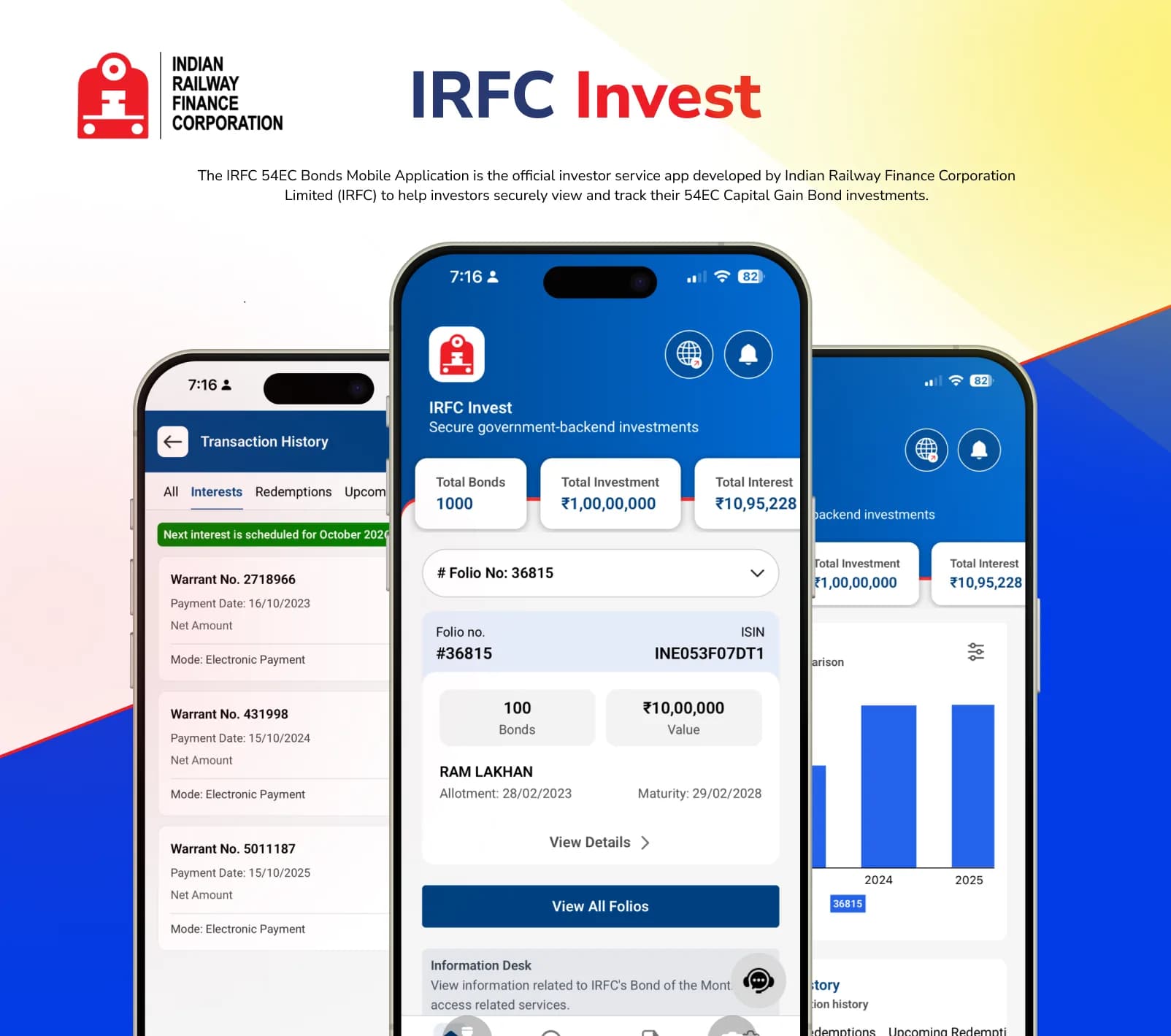
Engineered by Brihat, owned and operated by Indian Railway Finance Corporation. Screens from the released investor app.
Selected work
Three of them, and the number that moved.
Each one replaced something that was already running. The metric under each card is the one the client was measured on internally.


We work inside the systems you cannot switch off.
Most enterprise work is not a blank page. It is a core that has to keep clearing transactions, a plant that cannot stop, and a ledger somebody closes every month. These are the estates we build against, named.
Connect to
Kept running, integrated around. Each page names the failures that are not in the vendor documentation.
Move off
Replaced when the switching cost is finally lower than the cost of staying. Each page also says when staying is the right call.
Tally sits in both columns. Whether you integrate with it or leave it depends on your transaction volume and on who has to close the books — both pages say which, and when staying put is the cheaper answer. Not listed does not mean not done; these are the estates we have been inside often enough to write a page about. Ask about yours.
What we do
Five practices. One engineering standard.
Every practice is staffed by engineers who ship to production and then operate what they shipped.
Sectors where the process is the product.
Sectors where the operating model is specific enough that a packaged product has to be bent out of shape to fit it.
- BFSI & FintechInstitutional-grade platforms for banks, NBFCs, insurers, and fintechs — proven at IRFC scale.
- Healthcare & Life SciencesPatient platforms, HIS integration, and care-workflow systems built consent-first.
- Manufacturing & Industry 4.0Custom ERP, shop-floor systems, and vision AI for plants that outgrew their spreadsheets.
- Retail & E-commerceCommerce platforms, omnichannel operations, and sale-day resilience at 10× traffic.
- Logistics & Supply ChainControl towers, fleet visibility, and exception-first operations platforms.
- Real Estate & InfrastructureSales, project, and facility platforms for builders and infrastructure operators.
- Energy & UtilitiesField-force platforms, asset systems, and offline-first operations for utilities.
- EducationAdmissions-to-alumni platforms for institutions that run like the enterprises they are.
- Government & PSUCitizen and institutional platforms engineered to public-sector security and audit standards.
- Media & HospitalityContent, booking, and guest-experience platforms where experience is the product.

Where the work lands
Bond registries, plant floors, hospital records, national fleets.
We build for organisations where an outage is not an inconvenience — it is a regulator, a production line, or a patient waiting.
Five phases that de-risk a large build.
The engagement makes the thinking a deliverable you keep at every phase — process maps, architecture, the plan.
- 01
Understand
2–6 weeks
Workshops and process maps until you say: that is exactly it.
- 02
Define
2–4 weeks
A blueprint: architecture, phases, and the metrics we agree to be judged on.
- 03
Build
10–20 weeks
Working software every fortnight, in an environment you can log into.
- 04
Prove
3–5 weeks
Threat modelling, load and failover drills, and acceptance before go-live.
- 05
Operate
Ongoing
We run it, measure it, and extend it. Platforms compound; projects do not.
Handover
20 artefacts, 5 phases, all of them yours.
What lands in your repository at the end of each phase. Documentation is a phase deliverable with a date on it, signed off like any other.
Understand
- Problem definition document
- Current-state process maps
- Stakeholder and constraint register
- Opportunity sizing
Define
- Target architecture
- Phased delivery roadmap
- Success metrics and SLAs
- Commercial structure
Build
- Fortnightly releases
- Live environments
- Versioned scope
- Running test suite
Prove
- Security review
- Load and failover report
- UAT sign-off
- Runbooks
Operate
- 24×7 SLA operations
- Quarterly architecture review
- Roadmap cycles
- Handover on request
All of it yours
Every artefact ships with the phase that produces it, signed off like any other deliverable — not written up after the invoice. You keep them whether or not the next phase happens.
Certifications, partnerships and review profiles.
What the people who signed the contract say afterwards.
23 quotes from the engagements below. Hover to stop on one.
Every vendor before Brihat showed us their product. Brihat was the first to show us our own process, mapped better than we had mapped it ourselves. The ERP they built runs our plants today, and month-end stopped being a crisis.
The architecture review cost us a fortnight and saved us a rebuild. I would pay for that phase on its own and walk away happy.
Four campuses, four admissions systems, four versions of the truth. They gave us one record per student without asking any campus to change how it actually runs.
Sale day used to be the day the site fell over. Last one we did four times the traffic of the year before and nobody in the room was watching the dashboards by lunchtime.
A retail bond platform gets audited by people who assume it is wrong until shown otherwise. Ours went through three reviews without a single finding against the application. That is the whole story.
The cost case I signed was for a control tower. What I actually bought was eleven fewer people spending their mornings on the phone finding out where things were.
We were quoted eight months by two agencies. Brihat came back and said four, but only if we cut a third of the scope, and then explained which third and why. They were right about all of it.
Our migration ran over a single weekend with a rollback plan we rehearsed twice. Nothing dramatic happened, which was the entire objective and is the hardest thing to buy.
Next step
Bring us the problem. We will bring the architecture.
A discovery call takes forty-five minutes. You leave with our read on the problem, the shape of the system we would propose, and a straight answer on whether we are the right team for it.
- No sales deck
- An engineer on the call, not an account manager
- NDA before you share anything