

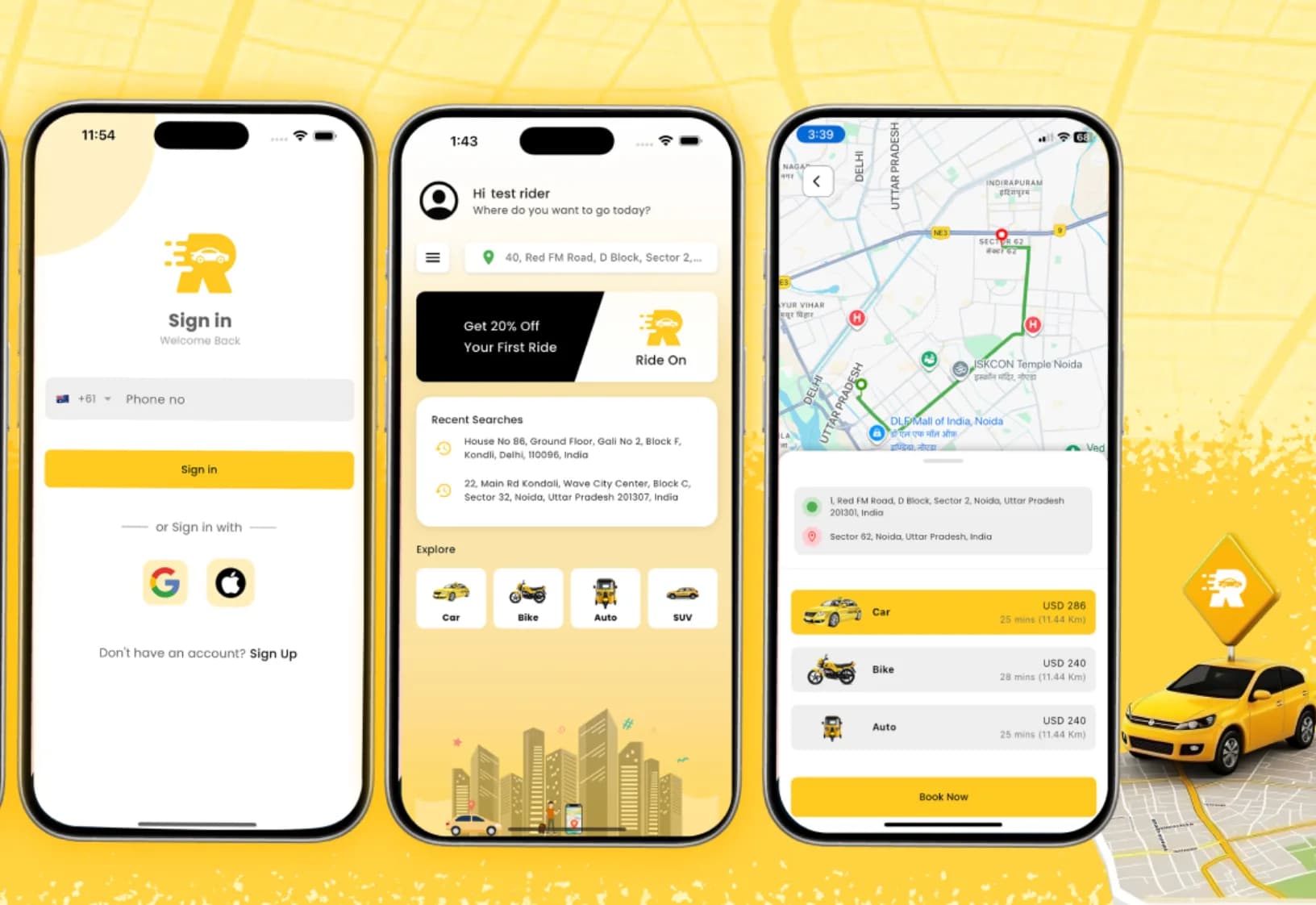
Ride hailing is a settlement problem wearing a map. The ride lasts minutes; the money — fares, driver payouts, refunds, disputed trips — is where the platform actually lives. Moving that layer onto cryptocurrency changes its properties: confirmation is not instantaneous, value can move between the start and the end of a trip, and there is no card network standing behind a reversal.
Ride One runs hailing, matching and the trip flow with cryptocurrency as the payment rail rather than cards or a stored-value wallet, with the settlement layer designed around those properties instead of assuming card behaviour and patching the differences.
Settlement, not the map, is the hard part
Matching a rider to a nearby driver is a well-understood problem with well-understood libraries. Making sure that every completed trip results in exactly one correct payment, once, under intermittent connectivity and cancelled rides, is the part that takes the engineering.
Volatility inside a trip
A fare quoted at pickup and settled at drop-off is denominated in something that may not be worth the same at both ends. Deciding what the rider is actually agreeing to, and at which moment, is a product question before it is a technical one — and it has to be answered the same way for the driver.
No chargeback means the dispute flow is yours
Card rails come with an arbitration process that platforms inherit for free. Settling on-chain means the platform owns disputes end to end: the evidence it keeps, the states a trip can be reversed from, and the rules it applies. That is a system to be designed, not a policy page to be written.