

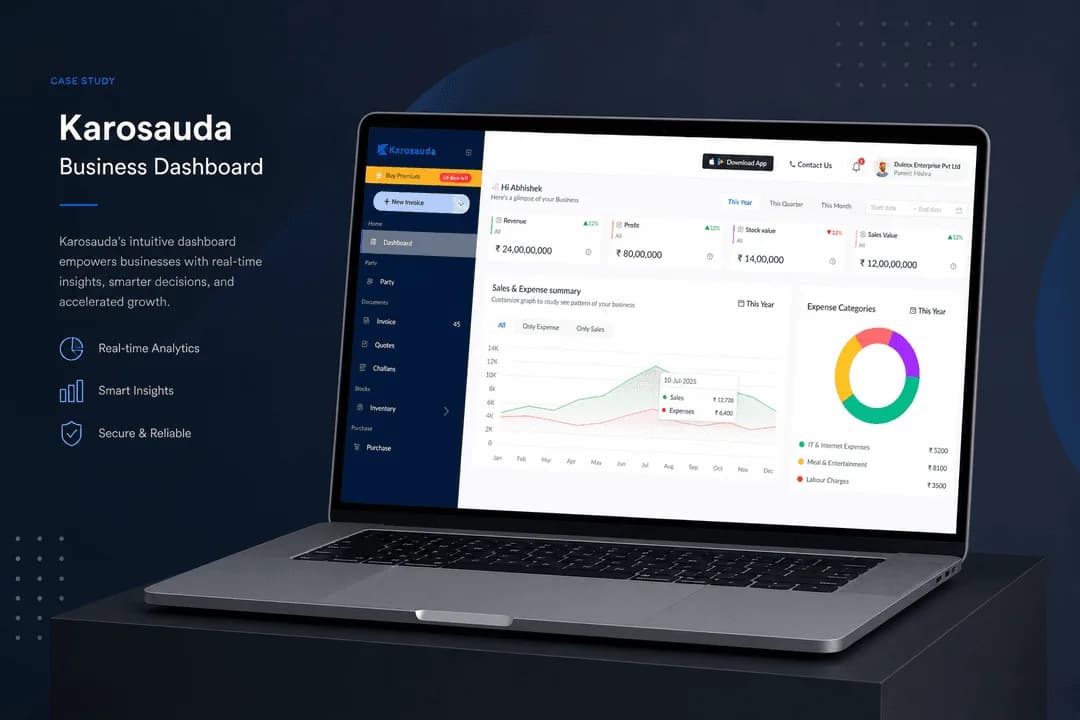
Accounting and tax software is overwhelmingly built for the business that files, not for the practice that files on its behalf. A practice carrying hundreds of clients works on a different shape of problem: many entities, each at a different stage, each with its own deadlines, documents and history, and nothing holding the whole book of work in one view.
KaroSauda is built for the practice side of that relationship. The client roster, the work in progress and the documents behind each engagement sit in one system instead of being spread across folders, spreadsheets and inboxes — the software a CA, an accountant or a tax consultant is inside for most of the working day.
The practice is a different product from the filing
A filing tool models one entity and one return. A practice tool models a portfolio: the same twelve steps repeated across hundreds of clients, all at different points, with the partner needing to know which ones are late rather than what any single one contains. Getting that unit of work right — the engagement, not the return — decides whether the software is usable at scale or abandoned by March.
Documents are the bottleneck, not the forms
Filling in a return is the fast part. The slow part is getting the bank statement, the invoice, the signed authority — and knowing, across a whole client list, which of them is still missing. Practice software earns its place at that step or nowhere.
Built as a product, not one firm's portal
Because it is sold to practices rather than run for one, nothing hard-codes a single firm's workflow. Service lists, stages and document requirements are configuration, which is the difference between software another practice can adopt and software that only fits the firm it was written in.