

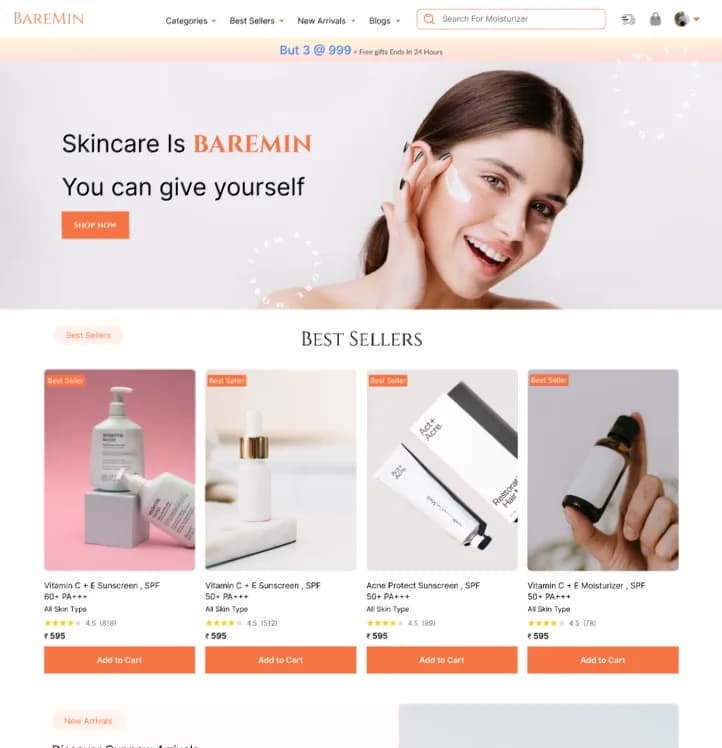
A single-seller store and a marketplace look identical to the shopper and are completely different systems underneath. The moment a second seller lists, everything becomes a routing question: whose stock, whose fulfilment, whose money, and whose problem when an order goes wrong.
Click Next was built as a marketplace from the start — many sellers listing into one storefront, with the catalogue, the order model and seller accounts designed for that from the first schema rather than retrofitted onto a single-seller store.
One order, several sellers
A basket that crosses sellers is one order to the shopper and several to everyone else: separate fulfilment, separate tracking, separate settlement, and partial cancellation that has to work. Deciding early that the order splits underneath while staying whole on screen avoids the rewrite that otherwise arrives with the second seller.
Onboarding sellers is the growth constraint
The storefront can only grow as fast as sellers can be brought on and their catalogues loaded. That makes seller onboarding — accounts, listings, bulk upload, payouts — a first-class part of the product rather than an admin screen added later.
The catalogue has to survive duplicates
Several sellers listing the same product is normal, not an error. Whether that appears as one product with competing offers or as many near-identical listings is the decision that shapes search, the product page and the shopper's experience of the whole site.