

The Design of "Nothing"
Exploring the importance of white space in a layout, silence in a musical composition, and empty "zen" corners in a home.
Brihat Team
Posted on Apr 03, 2026
The Power of White Space in Design
White space is not passive.
Every margin, every gap, every line of breathing room is an intentional decision that shapes how a reader experiences content.
The eye is not a camera — it is a storyteller.
And space determines where that story pauses, flows, and rests.
Research consistently shows that generous white space improves comprehension by up to 20%. It reduces cognitive load, making information easier to process.
A design filled with content asks for attention.
A design with space earns it.
What white space communicates
- Dense layouts feel urgent, crowded, and overwhelming
- Spacious layouts feel calm, confident, and premium
Silence in Musical Composition
John Cage’s 4'33" is perhaps the most radical expression of silence in music — four minutes and thirty-three seconds without a single intentional note.
Yet it is not silent.
What you hear instead is the environment: breath, movement, distant sound.
Cage wasn’t composing absence — he was composing awareness.
What silence does in music
- A pause that builds anticipation
- A break that gives structure
- A space that amplifies what follows
The note after silence feels louder.
More meaningful. More alive.
The pause is not empty — it is charged.
Space as Signal — The Proximity Principle
Space communicates relationships.
According to Gestalt psychology, elements placed close together are perceived as related, while those separated by space are seen as independent.
This means:
- Less space → connection
- More space → separation
White space becomes a language — one that defines hierarchy without words.
A well-designed layout doesn’t just show information.
It tells you what belongs together, what matters most, and where to focus.
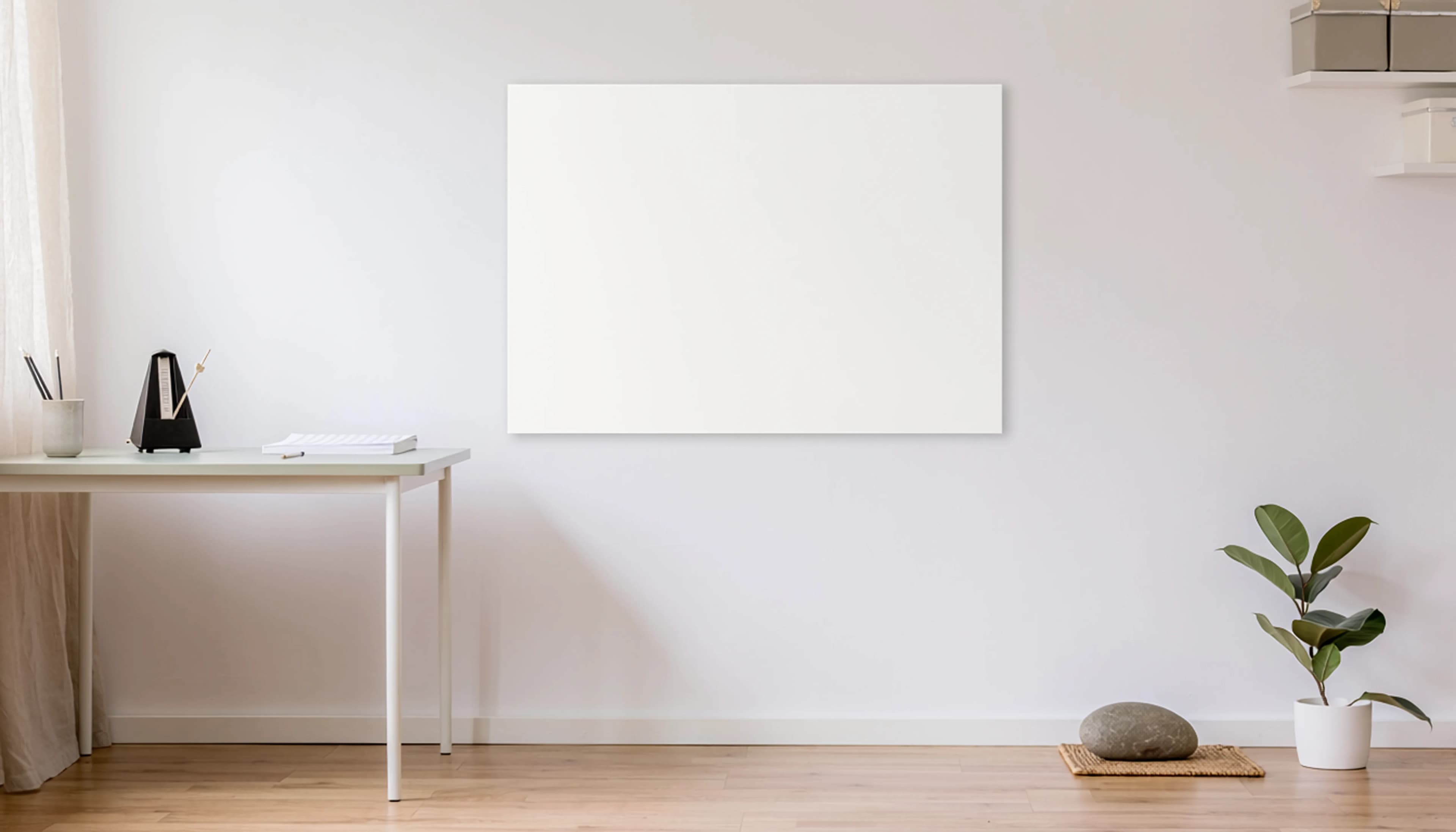
Empty “Zen” Corners in the Home
In Japanese design philosophy, an empty corner is not wasted space — it is intentional.
Concepts like wabi-sabi celebrate simplicity, imperfection, and restraint.
A quiet, open space allows the mind to slow down.
It gives the eye a place to rest.
Why minimal spaces feel better
- Visual clutter increases stress levels
- Open, minimal spaces reduce mental fatigue
An empty space is not doing nothing.
It is actively creating calm.
What Kind of “Nothing” Do You Need?
Not all emptiness is the same.
- Visual → white space in design
- Sonic → silence in sound
- Spatial → openness in physical environments
Understanding which form matters most to you is the first step in using it intentionally.
The Practice of Deliberate Nothing
Creating with restraint is difficult.
The natural instinct is to add:
one more element,
one more detail,
one more layer.
But great design often comes from the opposite direction — from removal.
What can I take away?
The pause in music.
The margin in design.
The empty corner in a room.
These are not signs of something missing.
They are signs of something understood.
Because emptiness, when used well, is not lack —
it is control.
Conclusion
The world constantly pushes toward more — more content, more noise, more stimulation.
But the most powerful experiences often come from less.
A pause.
A gap.
A moment of stillness.
The design of “nothing” is not about absence.
It is about intention.
And in that intention lies clarity, calm, and meaning.