

Biophilic Design
How architects and interior designers are bringing the "outdoors in" to boost productivity and mental health.
Brihat Team
Posted on Apr 02, 2026
Biophilic Design: How Architects Are Bringing the Outdoors In to Boost Productivity and Mental Health
Nature has always been humanity's first environment. Biophilic design is the discipline of remembering that—and building accordingly.
Introduction
The average person today spends more than 90% of their life indoors. We evolved over hundreds of thousands of years in forests, near water, and under open skies—yet in just a few generations, we’ve moved into environments dominated by steel, glass, and artificial light.
The psychological cost of this disconnection is now becoming clear.
Biophilic design is an architectural response to this problem. It is not simply about adding plants to a room—it is about restoring a meaningful relationship between humans and the natural world within built environments.
Understanding Biophilic Design
The concept of biophilia was introduced by biologist Edward O. Wilson, describing an innate human connection to nature. Designers have since translated this into physical spaces through three key approaches:
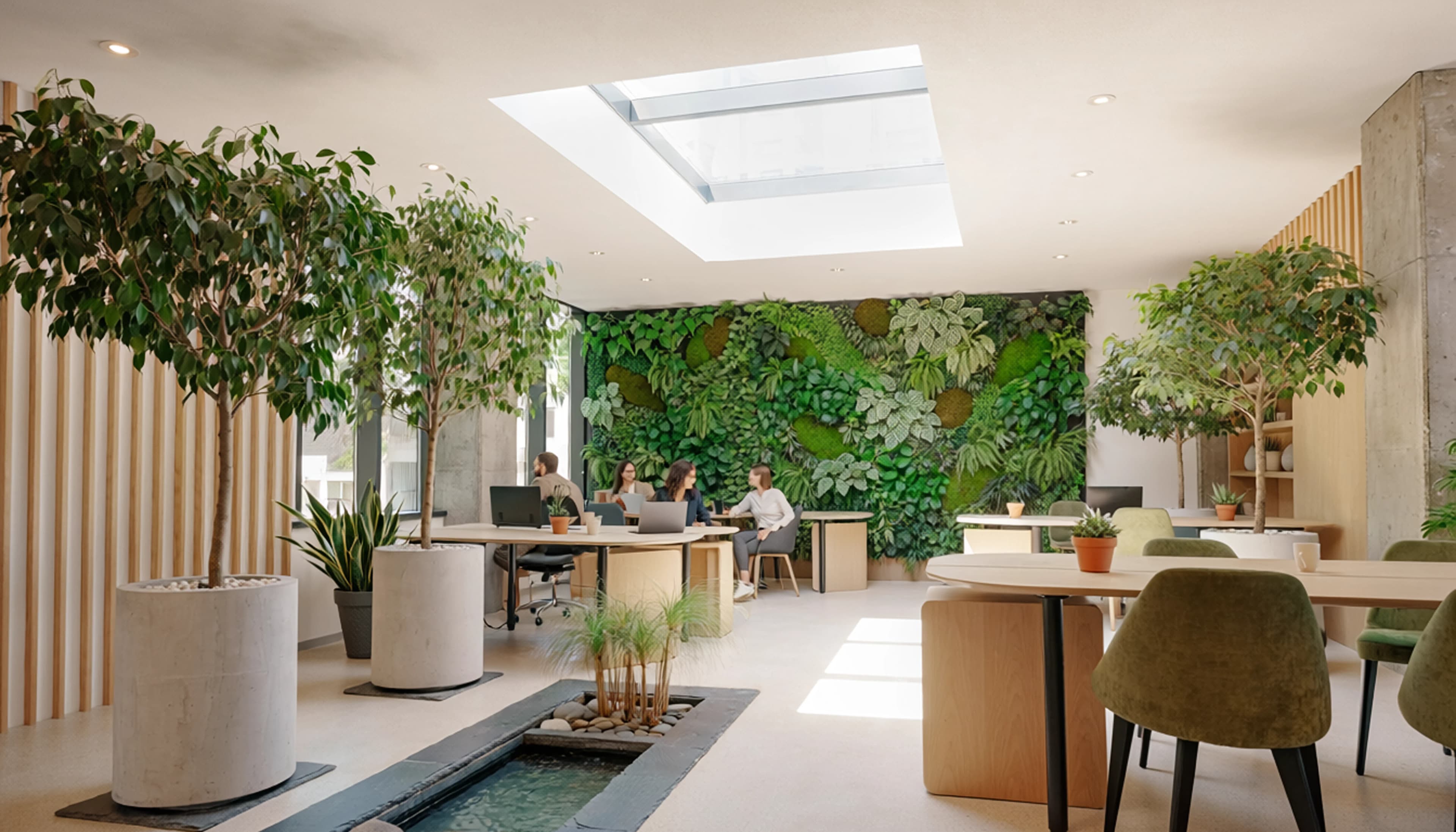
- Direct experience of nature — natural light, plants, water, airflow
- Indirect experience — natural materials, textures, colours, organic forms
- Spatial experience — openness, refuge, and complexity inspired by nature
Together, these elements create spaces that feel intuitive, calming, and energising.
Humans don’t just occupy spaces—they respond to them emotionally, biologically, and psychologically.
The Impact on Productivity
Biophilic design is not just aesthetic—it has measurable effects on performance.
Natural light helps regulate circadian rhythms, improving sleep, focus, and energy levels. Workers in well-lit environments consistently perform better than those in artificial settings.
Plants contribute by:
- Improving air quality
- Reducing noise levels
- Lowering stress
- Supporting cognitive restoration
Even small changes—like adding a plant or improving access to daylight—can significantly impact productivity.
Studies show that employees in environments enriched with natural elements report:
- Higher focus
- Increased creativity
- Reduced fatigue and burnout
Mental Health Benefits
The mental health impact of biophilic design is even more significant.
The Attention Restoration Theory suggests that natural environments help restore mental focus, while Stress Recovery Theory shows that exposure to nature reduces physiological stress markers like heart rate and cortisol.
One landmark study found that hospital patients with a view of trees:
- Recovered faster
- Needed less pain medication
- Had shorter hospital stays
A simple view of nature can improve mood, reduce stress, and accelerate healing.
Implementing Biophilic Design
Biophilic design doesn’t require a complete overhaul. Many high-impact changes are simple and cost-effective:
- Maximise natural light through windows and open layouts
- Add indoor plants or living walls
- Use natural materials like wood, stone, or cork
- Design spaces with both openness and privacy
- Improve airflow and ventilation
Even small interventions can transform how a space feels and functions.
The Broader Picture
Biophilic design sits at the intersection of:
- Mental health
- Sustainability
- Workplace productivity
- Human-centered design
It reflects a growing understanding that our environments directly shape our behaviour, emotions, and wellbeing.
As cities grow denser and digital life becomes more dominant, reconnecting with nature is no longer optional—it’s essential.
Conclusion
For years, design has focused on efficiency and performance.
The next frontier is emotional and biological connection.
Biophilic design reminds us that we are not separate from nature—we are part of it.
The spaces we create should reflect that truth.